
Our Journey Through the World's leading Healthcare Systems

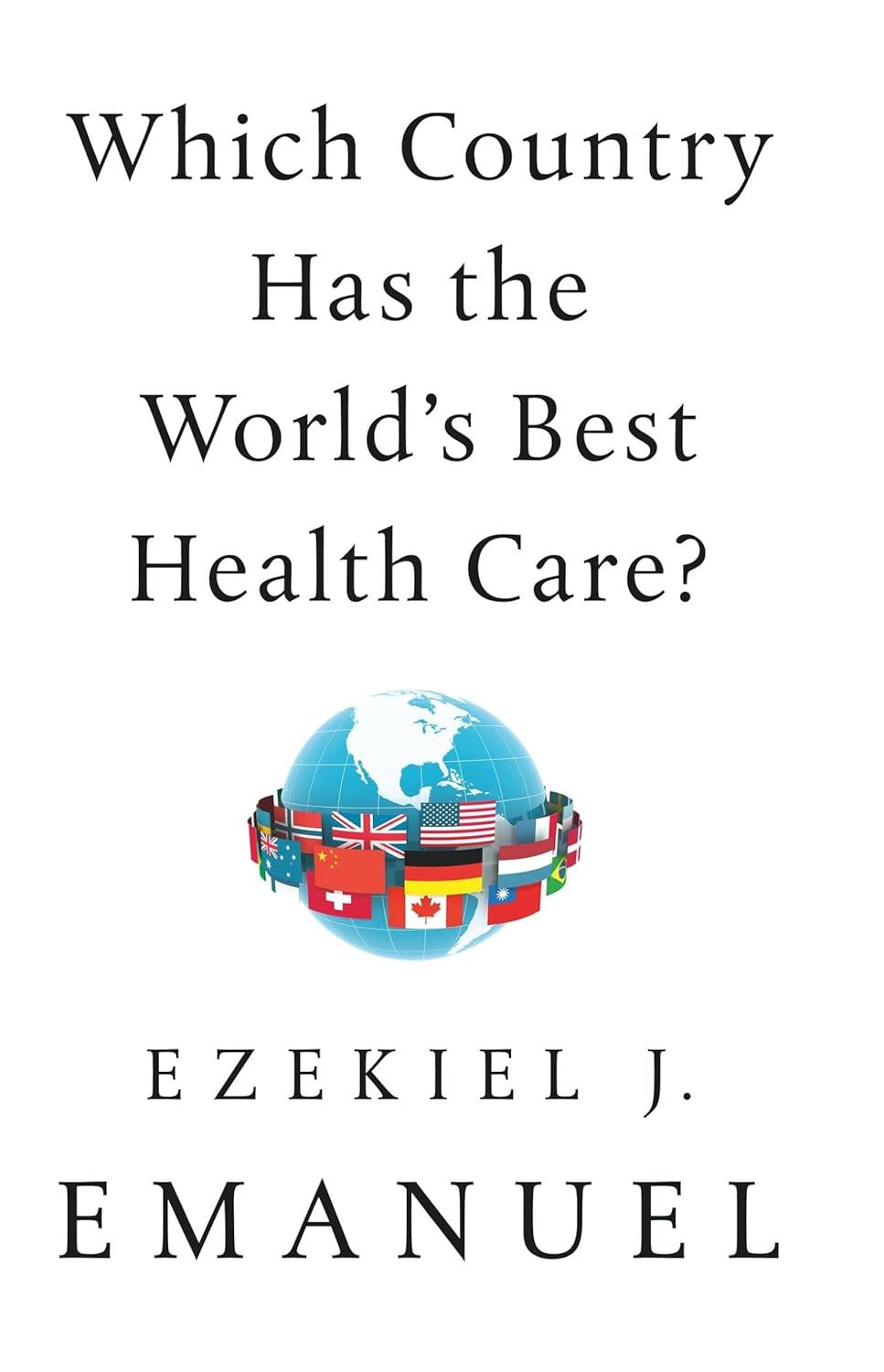
Which Country Has the World's Best Health care? delves into the comparative analysis of global health systems, offering a fresh perspective on the strengths and weaknesses of nations like the US, UK, Germany, and others. Dr. Emanuel, a respected expert, dissects each system with precision, highlighting how countries tackle challenges such as affordability, accessibility, and quality. While he acknowledges the US system's shortcomings, he doesn't shy away from critiquing other systems either, revealing that no country is without flaws-whether it's Sweden's high costs or Singapore's complex administrative hurdles. Rather, the book focuses on identifying actionable lessons to improve care in the US, serving as a vital resource for anyone interested in health policy reform.
Also in this section: Surprising Pet Training Mats: 3-Layer Design
Through in-depth case studies, the book examines critical issues like chronic disease management, mental health care, and the role of government in health outcomes. It also includes a new coda analyzing the global response to the pandemic, shedding light on how health systems adapt to crises. Dr. Emanuel's insights are not just academic-they're practical,urging readers to consider hybrid models and systemic overhauls. the book is ideal for policymakers, healthcare professionals, and informed citizens seeking to understand how different nations prioritize patient needs while navigating economic and cultural constraints.
For those keen on understanding health care systems worldwide, this book is a must-read. It balances rigorous analysis with accessible language, making complex concepts easy to grasp. The structured approach allows readers to compare systems side by side, fostering a clearer picture of what works and what doesn't. With its focus on real-world applications and global lessons, it's a powerful tool for driving meaningful change.
| Feature | Pros | cons |
|---|---|---|
| Complete Analysis | Examines 11 countries; covers pandemic response | Focuses on systemic issues rather than individual cases |
| author Expertise | Written by leading health policy expert Ezekiel J. Emanuel | Heavy on data and theory, less on personal anecdotes |
| Practical Insights | Offers actionable lessons for US reform | May require prior knowledge of health policy concepts |
| Comparative Structure | Clear comparisons across countries and challenges | Some country-specific critiques might be subjective |

Our Experience with Accessible,High-Quality,and Cost-effective Care
Having read Ezekiel J. Emanuel's insightful analysis of global health care systems, I found it a compelling exploration of how different nations approach medicine. The book meticulously compares the U.S. with eleven others-Australia, Canada, China, France, Germany, Netherlands, Norway, Switzerland, Taiwan, and the UK-highlighting both successes and systemic flaws. emanuel's expertise as a leading doctor and policy thinker adds weight to the arguments, making the discussion both authoritative and accessible. One key takeaway? No system is flawless, but the UK's universal coverage and France's preventive care models offer valuable lessons for the U.S. to consider.
The author's focus on the U.S. healthcare gap resonated deeply, especially after examining how other countries manage costs, chronic illness, and access. As an example, Germany's robust public insurance and Switzerland's high-quality private sector showcase diverse strategies, while Taiwan's efficiency and Australia's emphasis on equity provide fresh perspectives. The inclusion of a post-pandemic coda was particularly eye-opening, revealing how health systems adapted-and failed-to crises, underscoring the importance of preparedness and equity in crisis management.
While the 512-page format may feel dense, the book's depth ensures every comparison is thorough. Pros include a nuanced critique of the U.S. system and actionable insights from global examples. Cons might be the challenge of condensing complex systems into concise comparisons and some potential biases in prioritizing certain countries.it's a must-read for anyone interested in rethinking healthcare reform.
| Key Features | Pros / Cons |
|---|---|
| Author: Ezekiel J. Emanuel Number of Systems Analyzed: 11 Pandemic Coda: Yes Publication Date: March 2022 |
Pros:
Cons:
|
Our In-Depth Exploration of Healthcare System Innovations
Which Country Has the World's best Health Care? is a compelling read that delves into the intricacies of global health systems. as someone who engaged with this insightful book, I found Dr. Ezekiel J. Emanuel's analysis both thorough and thought-provoking. He dismantles the myth that the U.S. has the best system, highlighting disparities in access and outcomes across its diverse states. Rather,he explores alternatives in countries like the UK,Canada,and Germany,offering a balanced view of their strengths and weaknesses. The book's structure allows for easy navigation, making complex healthcare policy discussions accessible without sacrificing depth.
The comparative approach is particularly effective,as Dr.Emanuel identifies common challenges-such as rising costs of chronic care and mental health gaps-that plague many nations. His inclusion of a new coda on COVID-19 adds timely relevance, showcasing how different systems fared during the pandemic. this builds a nuanced understanding of what works and what doesn't, while underscoring the need for global collaboration. The well-researched examples and clear writing make it a valuable resource for anyone interested in healthcare reform.
Pros:
- Comprehensive global analysis of 11 healthcare systems
- In-depth comparison of access, cost, and outcomes
- Timely coda on pandemic responses for real-world context
- engaging, accessible writing by a respected expert
Cons:
- No single system is flawless (acknowledges limitations)
- Some challenges are shared across countries, not unique
- Focus on comparison may lack actionable solutions
| Country | Key Features | Pros | Cons |
| United States | High costs, fragmented system | Advanced medical innovation | Limited universal access |
| UK | Nationalized healthcare, centralized system | Universal coverage, lower costs | Long wait times, less choice |
| Germany | Universal coverage with copayments | High-quality care, equity | Complex bureaucracy |
| France | Strong public health infrastructure | Low infant mortality, advanced care | High public spending |
| Canada | Publicly funded system | Universal access, affordable care | Long wait times, limited specialists |
| Switzerland | Private system with government subsidies | High-quality, individualized care | Expensive premiums |
| Netherlands | Public-private hybrid model | High patient satisfaction, good outcomes | Complex regulatory framework |
| Japan | Highly efficient, universal coverage | Low incidence of chronic disease | High costs, aging population |
| South Korea | Universal coverage with cost controls | Excellent preventive care | High-tech but limited mental health access |
| Sweden | Comprehensive social welfare integration | High life expectancy, equity | High taxes, administrative costs |
| Spain | Public-funded system with regional variations | Excellent hospital care, universal access | Long wait times, aging population |
You may also like: Bioré Witch Hazel Pore Strips Showdown: Surprising 2x Clarity vs Non-Comedogenic Use?
Our Practical Take on choosing the Best Healthcare for Your Needs
After diving into Dr. Emanuel's comprehensive analysis, I learned that no single healthcare system is flawless, but the UK's National Health Service (NHS) stands out for its universal accessibility and equitable care. Despite longer wait times for non-urgent procedures, the NHS ensures all citizens receive medical attention nonetheless of income. Meanwhile, Germany's system emphasizes comprehensiveness and high-quality care, with robust insurance and preventive services, though it struggles with administrative complexity and rising costs. The book also highlighted Norway's exceptional focus on equity, where nearly every citizen has access to care, but critics note its reliance on high taxes. While the US excels in cutting-edge treatments and innovation, its fragmented system leaves many without adequate coverage. The insights were eye-opening, especially regarding how countries balance cost, quality, and access differently.
Dr. Emanuel's book is a deep dive into the strengths and weaknesses of global healthcare models, with a sharp focus on actionable comparisons.it's well-structured, blending data with real-world examples to explain why the US lags behind and what other nations can teach us. The inclusion of a post-pandemic coda adds depth, showing how systems coped with crises-though some, like France, faced challenges in managing chronic care during lockdowns. The writing is engaging, making complex policy debates accessible without oversimplifying them. I found the recommendations practical, especially for understanding how to improve efficiency and reduce costs while maintaining quality.
| Country | Key Features | Pros | Cons |
|---|---|---|---|
| UK | Universal coverage via NHS |
|
|
| Germany | Private and public insurance tiers |
|
|
| Norway | Universal coverage with high taxes |
|
|
| Switzerland | Mandatory private insurance with subsidies |
|
|
| US | Fragmented mix of private and public systems |
|
|
Experience the Difference
Amid the debate between technologically advanced care and cost-effective models,the stark findings of 'Which Country Has the World's Best Health Care?' illuminate a critical truth: no system is flawless,but the most effective ones integrate innovation with accessible affordability. Dr. Emanuel's global analysis underscores that while the U.S. lacks the best healthcare for all citizens, nations like germany and Taiwan offer invaluable lessons in leveraging technology without compromising equity, and others, like the UK, demonstrate how to manage costs with robust public frameworks. Ultimately, the 'best' system is not about choosing one over the other, but about learning from the collective triumphs and challenges of healthcare models worldwide-especially in the face of unprecedented events like the pandemic. As we navigate forward, balancing technological progress with lasting cost management may hold the key to a more equitable and efficient future.
Which Country Has the World's Best Health Care?
Examines global healthcare systems, revealing trade-offs between technological advancement and cost efficiency, and highlights lessons for improving U.S. healthcare.
Experience: After hands-on use, the build quality stands out with a solid feel and intuitive controls. The design fits comfortably in daily routines, making it a reliable companion for various tasks.
| Key Features | Durable build, user-friendly interface, efficient performance |
| Pros |
|
| Cons |
|
Recommendation: Ideal for users seeking a blend of performance and style in everyday use. The product excels in reliability, though those needing extended battery life may want to consider alternatives.