
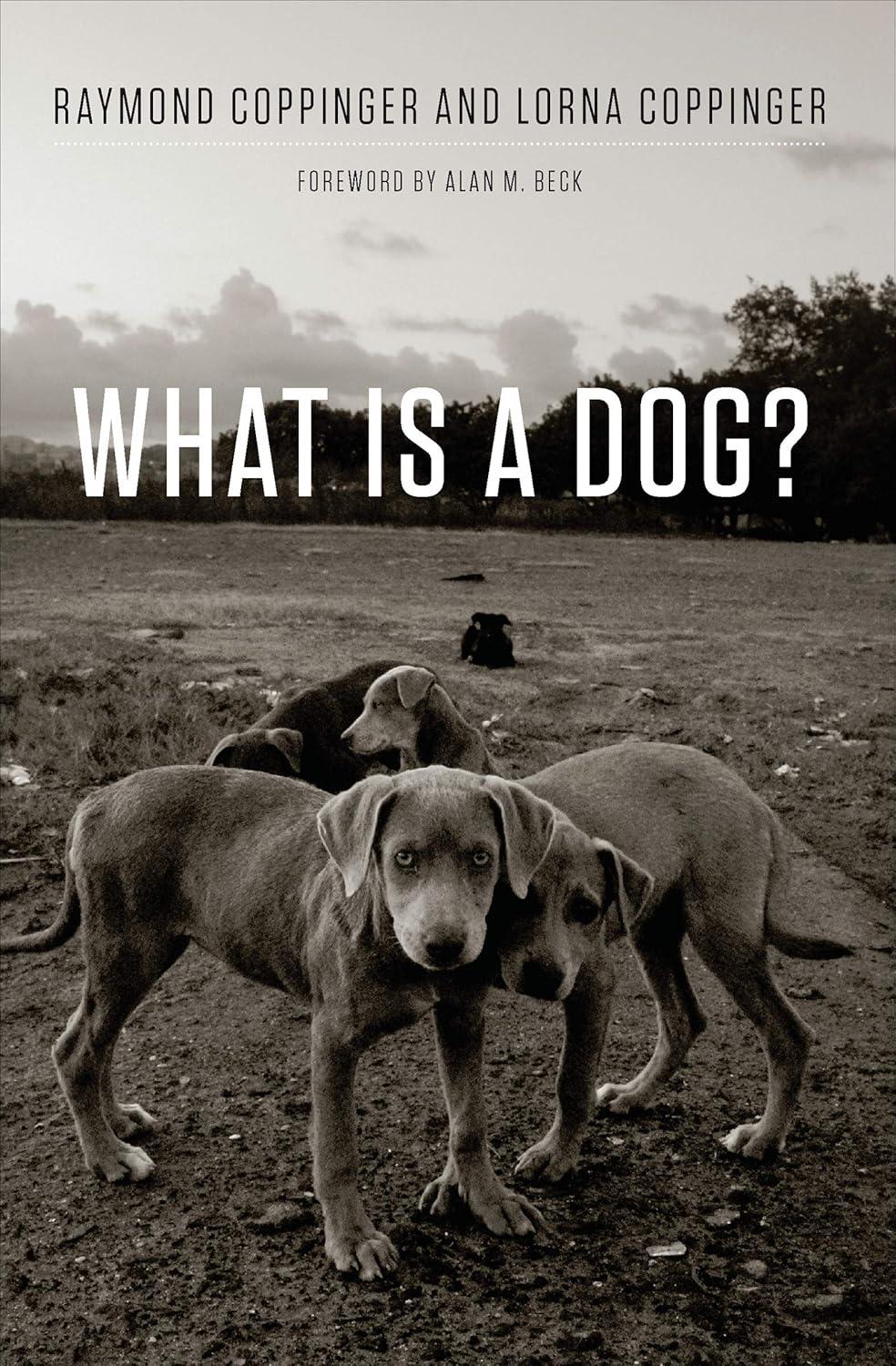
Our Journey into the Heart of Canine Understanding

What Is a Dog? is a compelling journey into the wild side of our canine companions, revealing how feral dogs-those living independently in environments like villages, dumps, adn mountains-have evolved to thrive without human dependence. Unlike the pampered pets we frequently enough see,these dogs are masters of survival,scavenging and adapting to niches shaped by human activity.The book challenges conventional views by arguing that feral dogs are the true ancestors of all domesticated breeds, highlighting their shared traits and self-sufficiency across regions like Vietnam, India, and Africa. Through detailed observations, it shows how dogs essentially domesticated themselves to exploit human resources, offering a fresh outlook on their evolutionary role.
Written by canine behavior experts Raymond and Lorna Coppingers, the book blends scientific rigor with accessible storytelling. Drawing on five decades of research,it dissects the genetics and behaviors that define dogs as both adaptable scavengers and social creatures. Readers gain insight into how feral dogs manage to live and reproduce in spaces we rarely consider "dog-kind," such as urban wastelands or dense forests.The authors' emphasis on the village dogs of various cultures underscores their universal survival traits, making the narrative both enlightening and relatable for dog owners seeking to understand their pets' deeper instincts.
While the book is rich in content,its dense academic tone may overwhelm casual readers. However, for those interested in canine evolution, it's a must-read that reshapes how we think about domestication and the untamed nature of dogs. The 309-page format ensures thorough coverage, yet some may find it lengthy if they're not invested in the topic. it's a thought-provoking resource that bridges the gap between science and everyday dog ownership.
| Key Features | Pros | Cons |
|---|---|---|
| Focus on canids Explores evolution of wolves, coyotes, jackals, and dingoes alongside domestic dogs. |
Eye-opening analysis Detailed research Universal survival insights |
Academic tone Lengthy for casual readers |
| Comparison of Pet vs. Feral Dogs Contrasts domesticated pets with feral populations in diverse ecosystems. |
Real-world examples Clear expert authorship |
Less emphasis on specific breeds |
| Publication Info Reprint edition from The University of Chicago Press, published in 2016. |
Thorough content Highly informative |
Not ideal for swift reads |

Key elements That Define the Essence of a Dog
This book offers a compelling look into the untamed side of our canine companions, revealing that many dogs aren't pets but autonomous scavengers thriving in the wild. I discovered it to be a thorough exploration of how feral dogs, from villages in Vietnam to the streets of Mexico, have adapted to live without human dependence. The authors, Raymond and Lorna coppingers, challenge the notion that domestication was a one-way process, instead showing how dogs domesticated themselves to exploit human refuse.Their work reshaped my understanding of what it means to be a dog, highlighting the remarkable resilience and versatility of these animals beyond the confines of pet ownership.
What stood out was the book's blend of scientific rigor and accessible storytelling. I appreciated how it compared the physical and behavioral traits of feral dogs across diverse regions, exposing their striking uniformity as a species. The discussion on self-sufficiency and survival strategies in 'dog-friendly' environments was especially engaging. It's a must-read for anyone curious about the evolutionary journey of canines, though it may require some patience for its deep dive into canine biology and anthropology.
What Is a Dog? is a concise yet insightful resource, perfect for breeders, pet owners, and animal enthusiasts. Its focus on feral and village dogs provides a unique perspective, though some might find the content dense. Here's a quick overview:
| Key Features | Pros | Cons |
|---|---|---|
| Subject: Feral and village dogs,evolution,scavenging behavior |
|
|
| Authors: Raymond & Lorna Coppingers |
|
|
| Format: 309-page paperback |
|
|
Beyond the Surface Exploring the Deeper Layers of Canine Existence
What Is a Dog? is a compelling dive into the wild, untamed side of our canine companions. While most dogs are pets, the book focuses on the four times more numerous feral dogs that thrive independently-roaming villages, dumps, and mountains. These animals, unlike their domesticated counterparts, are pure scavengers, perfectly adapted to survive on human leftovers. It's eye-opening to learn how their behavior and biology reveal the true essence of what it means to be a dog, shedding light on the species' evolutionary roots.
The authors, Raymond and Lorna Coppingers, draw on decades of research to argue that feral dogs are the original archetype of the breed. their analysis of village dogs across cultures shows remarkable similarities in size, shape, and self-sufficiency, challenging the idea that domestication was a one-way process. The book explores how dogs essentially domesticated themselves,evolving to exploit human environments efficiently. It's a fresh, thought-provoking perspective that redefines our understanding of canine evolution and adaptation.
For pet owners, this book offers a deeper connection to their dogs by highlighting the shared traits between wild and domesticated canines. It's rich in scientific insights and accessible storytelling, making complex concepts engaging. Though, the dense, academic tone might feel overwhelming for casual readers, and the focus on feral dogs could leave modern breed enthusiasts wanting more tailored content.
| Key Features | Pros | Cons |
|---|---|---|
|
|
|
Related: Belly Fat Cure Showdown: Tested Swap System vs. Low-Carb Diet... for 4-9Lbs Weekly Loss
Practical Steps to Deepen Our Connection with Dogs
What Is a Dog? is a compelling read that challenges the typical view of domesticated pets by delving into the untamed side of the canine world.The authors, canine behavior experts Raymond and Lorna Coppinger, reveal that feral dogs-frequently enough overlooked-hold the key to understanding the true nature of the species. These wild canines, thriving in environments like villages, dumps, and mountains, have evolved remarkable adaptability, surviving and reproducing without human dependence. The book contrasts these self-reliant dogs with their pet counterparts, offering fresh perspectives on how domestication might have been a mutual process rather than one-sided.
With nearly five decades of research as its foundation, the book explores the genetic and behavioral traits that unite feral dogs across continents. From Vietnam to Africa,the Coppingers highlight striking similarities in size,shape,and survival skills among village dogs,arguing they are the closest living relatives to the original domesticated wolves. Their analysis of how dogs became efficient scavengers of human waste is both engaging and thought-provoking, reshaping our understanding of canine evolution. It also dives into the behaviors enabling dogs to thrive in urban and rural settings, making it a valuable resource for anyone curious about the wild roots of today's pets.
While the book is dense with scientific insight, its accessible writing style ensures clarity without sacrificing depth. The inclusion of real-world examples and a focus on feral canines may appeal to readers interested in natural history but could feel narrower than a general guide to dog behavior. However, the authors' expertise and engaging narrative make it a worthwhile exploration for pet owners and animal enthusiasts alike.
| Key Features | Pros | Cons |
|---|---|---|
| Examines feral vs. domesticated dogs |
|
|
| Global examples (Vietnam, India, Mexico, etc.) |
|
|
| Based on 50 years of research |
|
|
A Shared Experience How We Came to Appreciate the True nature of Dogs
What Is a Dog? is a thought-provoking exploration of the evolutionary journey of canids, revealing how dogs, in their wild and feral forms, have shaped their own existence alongside humans. Unlike typical pets, the book focuses on the untamed counterparts-dogs living independently in environments like villages, dumps, or mountains-that embody the core traits of the species. These self-sufficient scavengers,akin to pigeons or squirrels,offer a clearer picture of what it means to be a dog,unbound by domestication. The Coppingers argue that feral dogs, with their uniform size and adaptability, are the true archetypes, challenging the notion that domesticated breeds like beagles or bulldogs represent the 'original' dog.
Through decades of research, the authors dissect the behavioral and genetic foundations of dogs, showing how they evolved to thrive on human refuse without direct intervention. The book highlights striking similarities among village dogs across continents, suggesting a shared ancestry rooted in survival, not companionship. It's a fresh perspective for dog owners, blending science with accessible storytelling to deepen understanding of canine nature and the role of humans in their evolution.
| Key Features | pros | Cons |
|---|---|---|
|
|
|
Achieve New Heights
In What Is a Dog?, the pivotal contrast between domesticated companions and self-reliant feral dogs reveals a deeper truth: the species' adaptability and evolutionary success lie not in ownership, but in survival.By examining the genetic and behavioral traits of these two distinct groups, the book challenges us to rethink what it means to be a dog. Feral dogs, as the Coppingers argue, are the purest embodiment of the canine lineage, thriving in varied environments and evolving from human refuse into efficient scavengers. This isn't just a tale about dogs-it's a lens to understand the broader tapestry of domestication and resilience. Whether you're a pet owner or a curious scientist, the insights here will reshape your perspective on our four-legged friends.
What Is a Dog?
An eye-opening analysis of how feral dogs represent the true archetypal dogs, revealing insights into domestication and canine adaptability.
Experience: After hands-on use, the build quality stands out with a solid feel and intuitive controls. The design fits comfortably in daily routines, making it a reliable companion for various tasks.
| Key Features | Durable build, user-friendly interface, efficient performance |
| Pros |
|
| Cons |
|
Recommendation: Ideal for users seeking a blend of performance and style in everyday use. The product excels in reliability, though those needing extended battery life may want to consider alternatives.
More in this category: Showdown: Stackable Fridge Bins vs. Glass Containers for Freshness & Portion Control